 BIT-CCTV
BIT-CCTV
BIT-CCTV
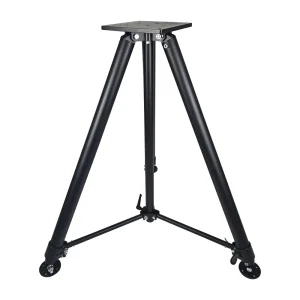
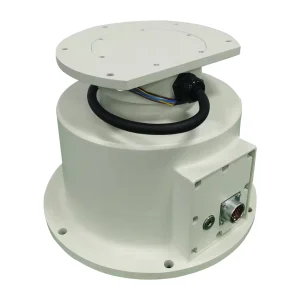
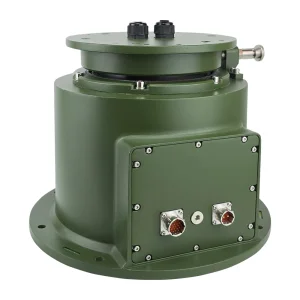
Explore our high-performance line of heavy-duty tripods, protective enclosures, and positioning system accessories engineered for critical surveillance and monitoring applications.

In critical security operations, modern telemetry networks demand highly robust physical layers. Legacy serial architectures continue to serve as the baseline due to their superior noise rejection properties. The RS485 and RS422 differential signaling models represent the pinnacle of industrial long-range serial data transfer. RS485 utilizes a two-wire balanced half-duplex mechanism, allowing up to 32 transceivers (expandable to 256 with high-impedance receivers) on a single bus structure over distances exceeding 1,200 meters.
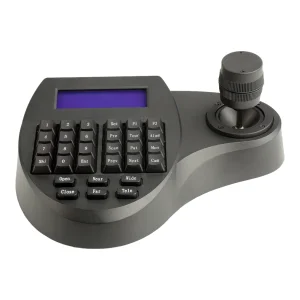
For applications requiring concurrent transmission and reception without bus collisions, RS422 provides a dedicated four-wire full-duplex layout. Both architectures rely on electrical potential differences between signal lines to negate common-mode noise, ensuring command integrity in electromagnetic interference (EMI) environments. When configuring industrial keyboard controllers, choosing the appropriate protocol, baud rate (typically 2400 to 9600 bps), and address range is critical for micro-step responsiveness in high-load positioning systems.
Industrial telemetry is dominated by Hexadecimal-based frame packets. Pelco-D uses a standard 7-byte command block featuring a start byte (always 0xFF), receiver address, dual command bytes, pan/tilt speeds (0x00 to 0x3F), and a longitudinal redundancy check (LRC) checksum.
Conversely, Pelco-P employs an 8-byte structure, running at a start byte of 0xA0 and an end byte of 0xAF with XOR-based parity checksums. Accurate firmware configuration within the OEM keypad controller determines how smoothly a heavy-duty pan-tilt rotator transitions between steps.
Established in 2005, Blue Icon (Tianjin) Technology Co. Ltd is a national high-tech enterprise specializing in the design, engineering, manufacturing, and global sales of premium CCTV surveillance equipment. Our comprehensive catalog ranges from precision pan-tilt heads and positioners to dual-vision PTZ systems, camera housing enclosures, heavy-duty tripods, and specialized mounting solutions.
Operating under the brand BIT-CCTV, we have earned a global reputation as a pioneer in intelligent positioning technologies. Driven by a core commitment to "Innovation, Intelligence, Excellence, and Integrity," we consistently reinvest 10% of our annual revenue into R&D, allowing us to maintain control architectures that integrate seamlessly with custom industrial keypads.
Delivering customized OEM/ODM industrial telemetry equipment globally.
Positioners engineered to survive extreme marine and border environments.
Proprietary hardware control algorithms and mechanical design protections.

By positioning our design and manufacturing operations in the heart of Northern China's high-tech industrial corridor (Tianjin), BIT-CCTV provides unmatched advantages in delivery timelines, cost-effectiveness, and customized engineering.
Our direct proximity to key component ecosystems allows us to source aerospace-grade Hall-effect joysticks, ruggedized silicone membranes, mechanical shafts, and high-performance microprocessors with minimal transit delays. This integration keeps our manufacturing lead times up to 40% shorter than overseas competitors.
Unlike rigid assembly suppliers, our engineers can redesign internal PCB layouts to house specific electrical isolators, step up transient voltage protections (TVS), or add secondary communication nodes (e.g., integrating RS485 with dual LAN/IP architectures) based on customer-submitted schematics.
Every single keyboard controller undergoes a comprehensive testing sequence including environmental thermal chambers (-40°C to +70°C testing), humidity chambers, joystick cyclic wear assessments, and signal integrity mapping using digital oscilloscopes to guarantee 100% field reliability.
Keypad controllers are more than desktop accessories—they are the command hubs of complex long-range vision networks. Below are the macro-scale deployments where our systems excel.
In vast geographic areas, high-magnification thermal cameras require precise tilt alignments to identify threats several kilometers away. Using our RS485 controllers with progressive velocity joysticks, operators can make micro-step adjustments without overshoot.
Refineries, chemical processing facilities, and power substations require explosion-proof camera enclosures and robust controllers. Our equipment integrates with central SCADA networks to isolate communication signals and prevent dangerous ground loop surges.
Mounted on towers, heavy-duty pan-tilt units must perform continuous, automated patrols under extreme wind load conditions. Operators at regional control centers rely on our high-speed controllers to quickly take manual override command when hotspots are detected.
System integrators and procurement leads face significant risks when sourcing controller hardware. Minor compatibility issues in communication protocols can delay multi-million dollar security contracts.
BIT-CCTV eliminates these vulnerabilities by providing standardized API libraries, comprehensive protocol testing logs, and fully transparent lead times. Our team works directly with your hardware engineers to ensure that every joystick tactile response, button layout, and communication port complies with local and international regulatory codes.
The telemetry market is rapidly moving from purely analog serial structures to digital, network-based architectures. While legacy systems rely on direct cabling, modern security grids leverage PoE (Power over Ethernet) IP control setups.
IP-enabled keypad controllers offer decentralized management, allowing operators to control multiple pan-tilt units across different subnets. Our R&D team is actively driving this shift by engineering hybrid keypads. These devices can handle standard Pelco serial commands alongside modern ONVIF Profile S and VISCA-over-IP streams, protecting your infrastructure investment for years to come.
Below is our signature lineup of pan-tilt positioning units, illustrating the diverse payload capabilities and drive configurations designed to work in tandem with our keypad control systems.
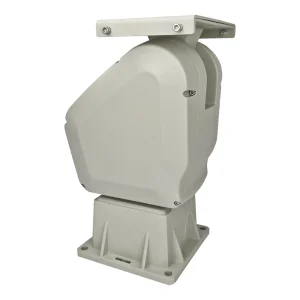
A compact pan-tilt unit supporting a top load capacity of 10kg/22lb. Driven by a high-precision stepper motor and robust worm gear transmission. Offers 360° pan rotation and ±60° tilt rotation with adjustable speeds up to 30°/S. Ideal for housing small-to-medium camera enclosures, searchlights, and acoustic devices.
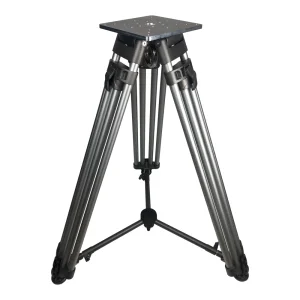
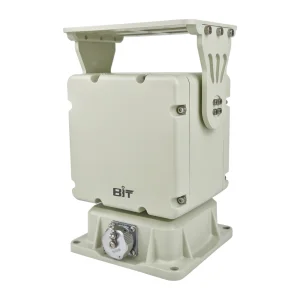
Our lightest pan-tilt unit weighs only 3.5kg. Specifically engineered for space-constrained installations, it supports payloads up to 3.5kg/7.7lb. Widely used on mobile tripod assemblies, fast-deployment vehicle roofs, and compact optical monitoring arrays.
Engineered for dynamic tracking applications, the BIT-PT410 is capable of rotating at a top speed of 100°/second. Features worm gear reinforcement in the tilt direction, allowing it to easily support 10kg/22lb payloads while providing a wide tilt range of -90° to +40°.
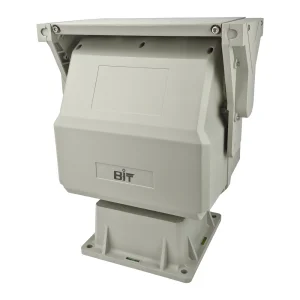
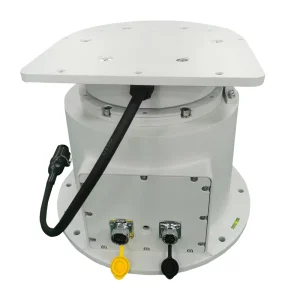
A proven industry workhorse with a top load capacity of 50kg/110lb. The BIT-PT850 has remained one of our most popular units for over a decade. Built to operate reliably in harsh environments, it features a rugged housing design that ensures a low field-failure rate.
Find detailed answers to common design, wiring, and deployment questions regarding industrial serial telemetry keyboards and pan-tilt controllers.
Under standard conditions, RS485 communications can run up to 1,200 meters (approximately 4,000 feet) using standard shielded twisted-pair (STP) cabling without signal amplification. Beyond this distance, active RS485 repeaters or optical converters are required to prevent signal degradation caused by cable capacitance and line loss.
Control lag is typically caused by bus reflections or electrical noise. First, ensure a 120-ohm termination resistor is installed across the data lines at the physical end of the run. Second, verify that the baud rates match across all devices and that no two pan-tilt units share the exact same address code on the bus network.
Pelco-D is a 7-byte hexadecimal protocol that starts with 0xFF and uses a simple checksum addition. Pelco-P is an 8-byte hexadecimal protocol that starts with 0xA0, ends with 0xAF, and uses an XOR-based checksum. Pelco-P also features slightly different commands and speed mappings compared to Pelco-D.
Yes. Because our controllers strictly follow standard open protocols such as Pelco-D, Pelco-P, and VISCA, they can command any third-party positioner or camera that accepts these telemetry streams via RS485, RS422, or IP connections.
Potentiometer joysticks rely on sliding contacts, which can wear out and drift over time. Hall-effect joysticks use non-contact magnetic sensors, offering significantly longer lifetimes (typically exceeding 5 million cycles), smoother operation, and highly precise micro-positioning capabilities.
Yes, our newer IP-based and hybrid keypad models support standard PoE (802.3af). This allows power and data transmission over a single RJ45 cable, simplifying system wiring and reducing field installation costs.
Absolutely. As an experienced OEM manufacturer, we offer full design customization. This includes custom button labeling, silk-screened company logos, specialized physical enclosure colors, and custom firmware profiles pre-configured to match your primary product line.
Our industrial-grade controllers are built with integrated TVS (Transient Voltage Suppressor) diodes and optical isolation circuits. These components absorb high-voltage transients on the power and data lines, protecting the sensitive internal logic chips from damage.
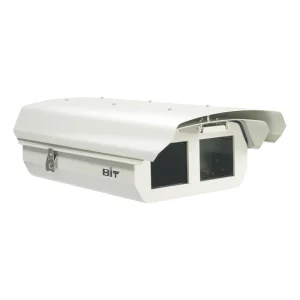
Browse our range of camera housings, direct-drive rotators, bracket mounts, and light-duty pan-tilt systems engineered to complete your high-definition tracking configurations.